Art & culture
The weight of a face
A close look at Holbein’s portrait of Sir Thomas More: the green curtain, folded paper, and extraordinary concentration of a face that refuses easy explanation.
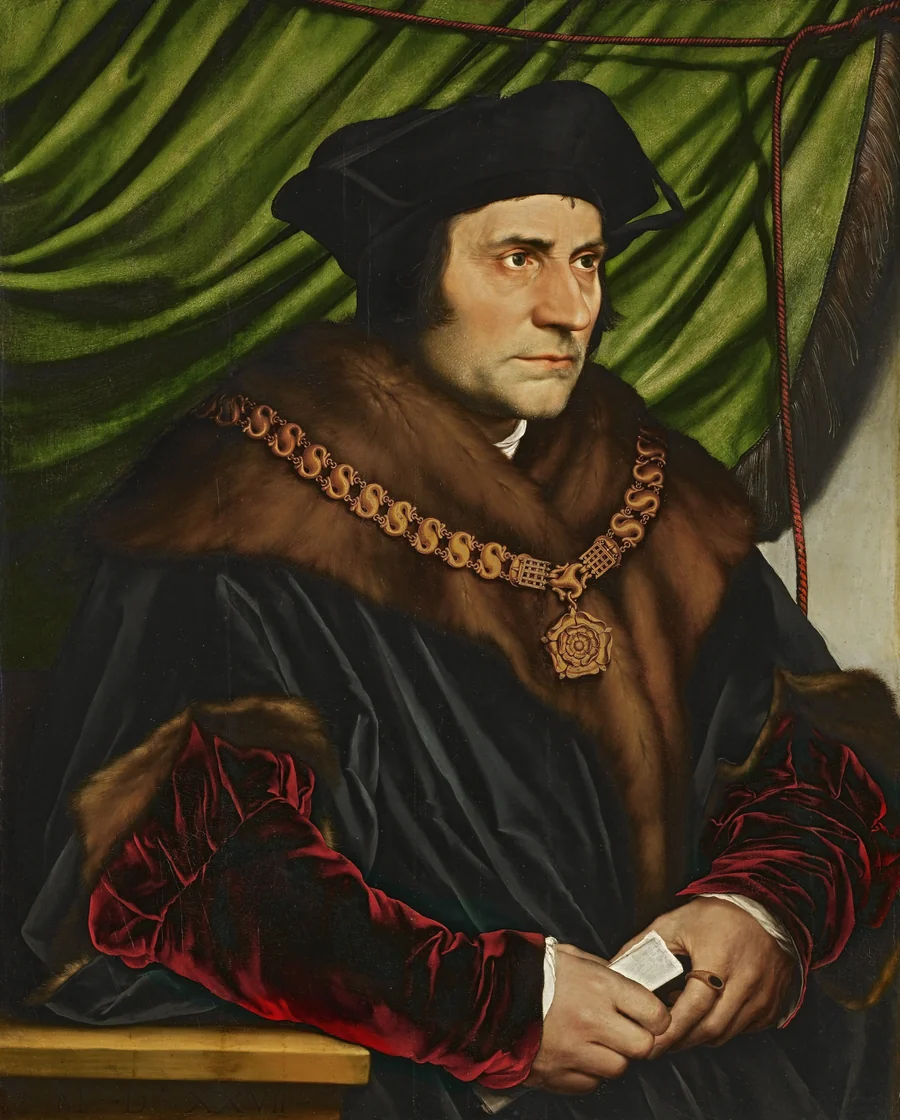
The eye first notices the richness of the clothing. Fur, velvet, a gold chain, and the green curtain give the portrait its material density. Then the face begins to hold attention, and the surrounding splendour becomes strangely quiet.
In Holbein’s Sir Thomas More, the folded paper in the hands gives us another place to look. It is tempting to turn every object into a clue and make the painting deliver a complete account of its sitter. A portrait can encourage that confidence without justifying it.
We can spend longer with what is visible: the meeting of pale skin and dark cap, the weight of the sleeves, the direction of the eyes. These details give the encounter its force before a historical explanation arrives.
Looking carefully also means recognising a limit. An expression cannot certify a person’s virtue or tell us everything about their convictions. The painting remains powerful when we let it be particular: one face, one arrangement of hands, and an attention we have to bring back whenever we begin to invent too much.